Mental Hub: How We Helped Light of Hope Build a Platform for Mental Health Support
Ukraine
HealthTech
7 months
1 Frontend Developer, 1 Backend Developer, PM, QA, DevOps
Software development
Fast API, HTMX, React
About Client
Our journey with Light of Hope started thanks to a connection made through TechForGood — a platform that brings together non-profits and tech teams to build low- or no-cost digital solutions.
The Ukrainian NGO Light of Hope needed a digital product to support its mental health initiative. Based in Poltava, Light of Hope provides services aimed at supporting vulnerable communities, including shelters for women affected by domestic violence, addiction recovery programs, HIV testing, and reintegration centers. Since the full-scale invasion of Ukraine, the organization has also been working with internally displaced persons and veterans.
Their new aim was to provide psychological support to anyone in need. Those in need could receive it free of charge, funded by international and local grants. Light of Hope needed an intuitive platform to streamline session scheduling and manage all related processes. While they already had a business-oriented platform, it wasn’t tailored to NGOs and didn’t fully address their needs. That’s how we started working on Mental Hub.
The Challenge
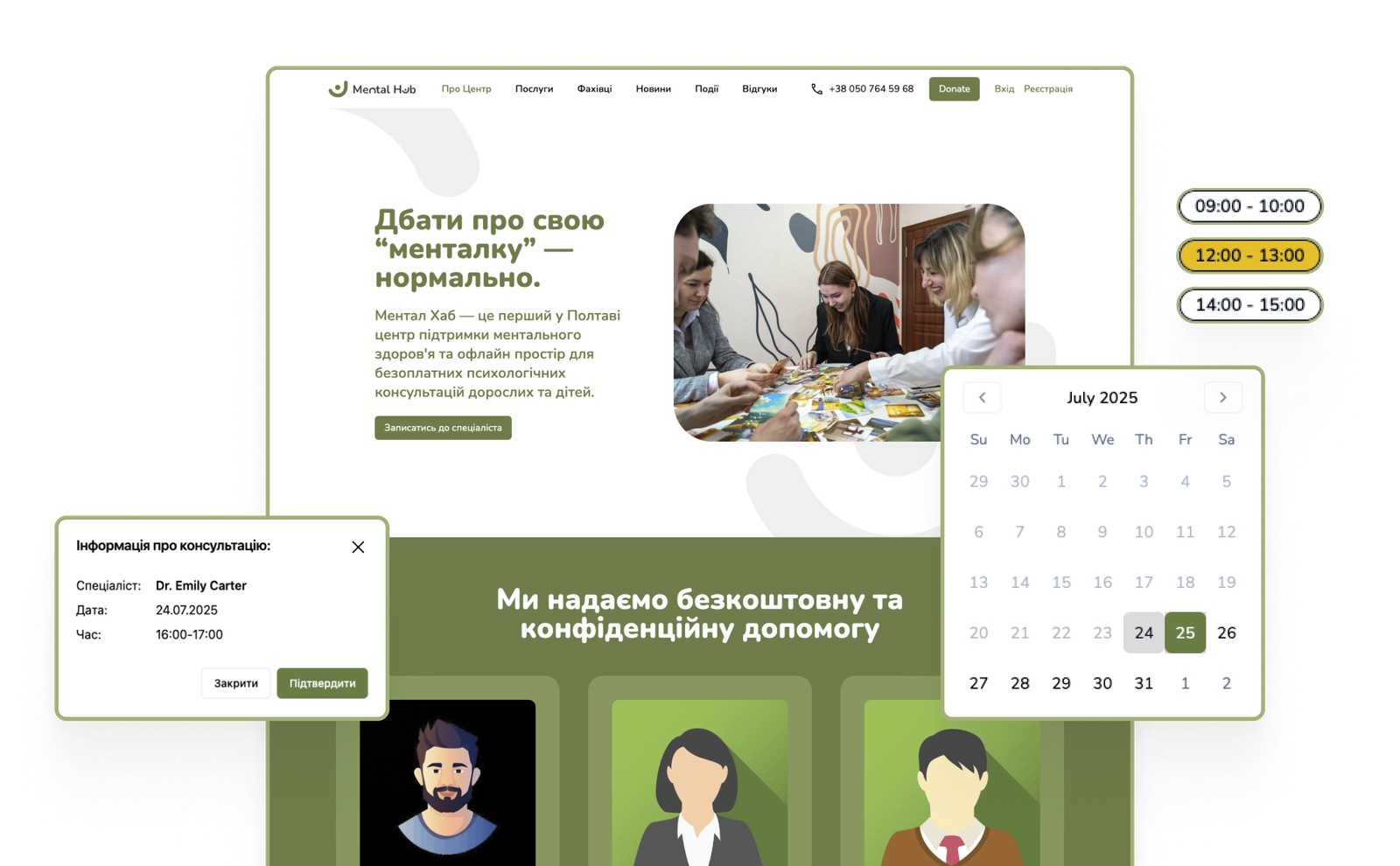
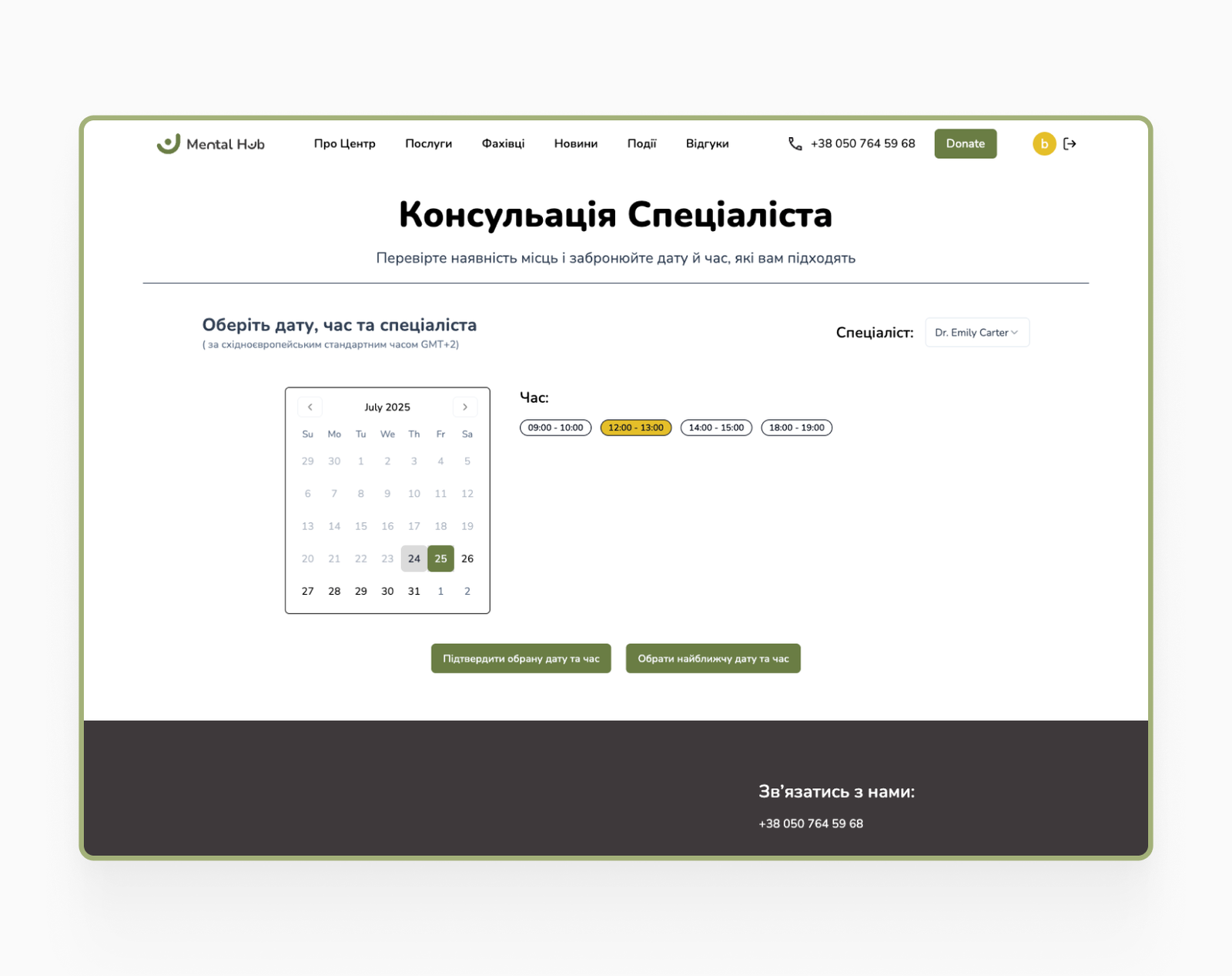
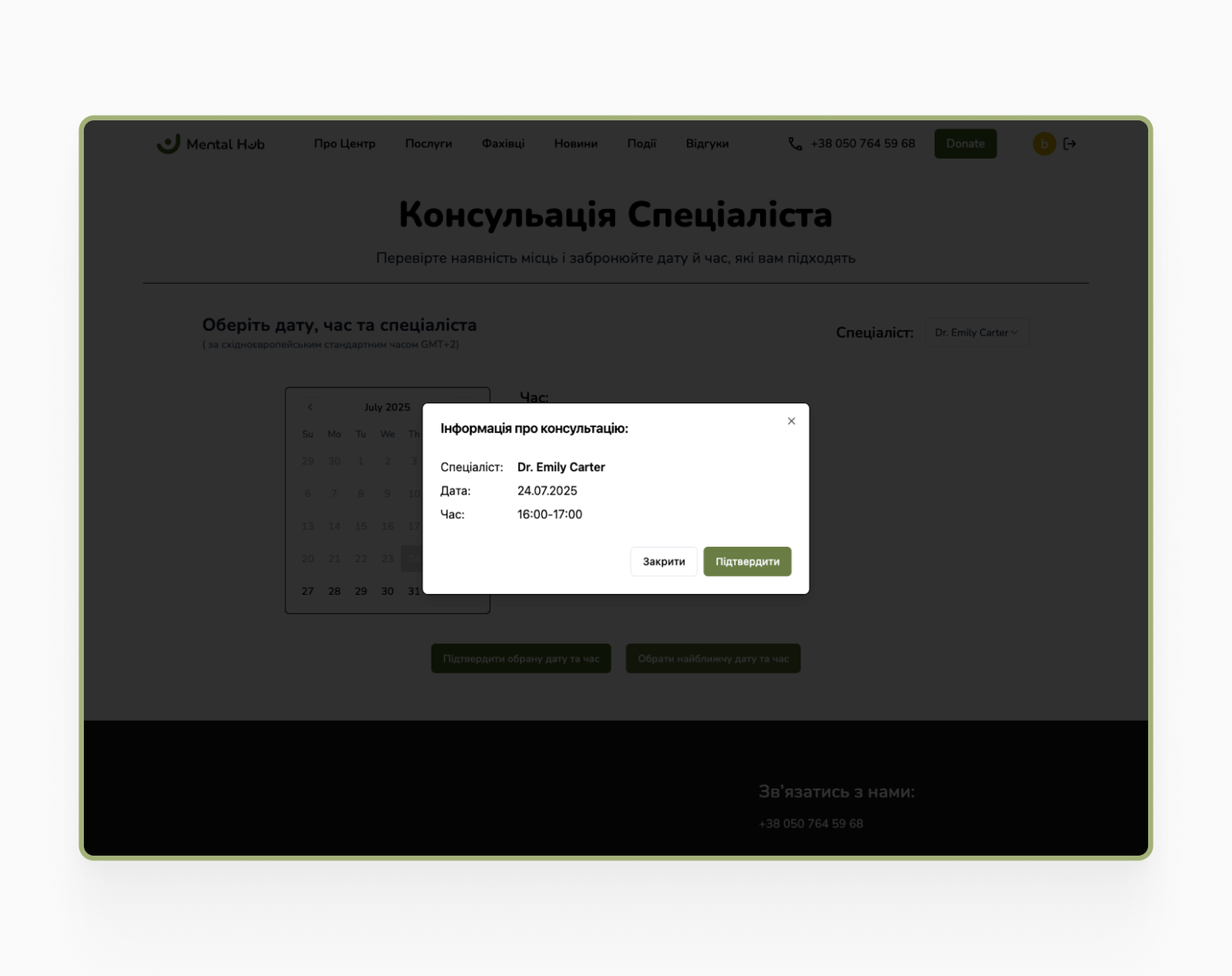
The core challenge was to build a booking system that required minimal human intervention. As a non-profit, Light of Hope had limited staff and budget. We aimed to minimize admin oversight, automate therapist management, and also automate the whole booking and reminder flow.
- Admin onboarding needed to be fast and available for non-tech people. The interface had to feel intuitive from the first working day.
- Therapists generously work on a volunteer or half-volunteer basis, so missed or confused bookings must be resolved.
- We faced unclear responsibilities and slow feedback, which is a common issue in non-profits.
Goals

Minimum Human Involvement
We aimed to automate booking and reminders, as well as partially automate reporting to reduce the work of volunteers.
Shifting from Business Platform
Replace the existing commercial platform with a solution tailored to non-profit needs.

Design with Empathy
We wanted to create a smooth digital journey that wouldn’t overwhelm users seeking mental health support.
Dev Process
Discovery for CustDev
While the product had a clear overarching goal, one of our early challenges was defining the most effective approach to achieve it. We therefore conducted in-depth research to pinpoint the simplest and most impactful user journey. To tackle this issue, we went directly to those doing the work and chose the way of customer development. By speaking directly with therapists and admins, listening to their workflows and pain points, we mapped out real needs.
Frontend for a Meaningful User Journey
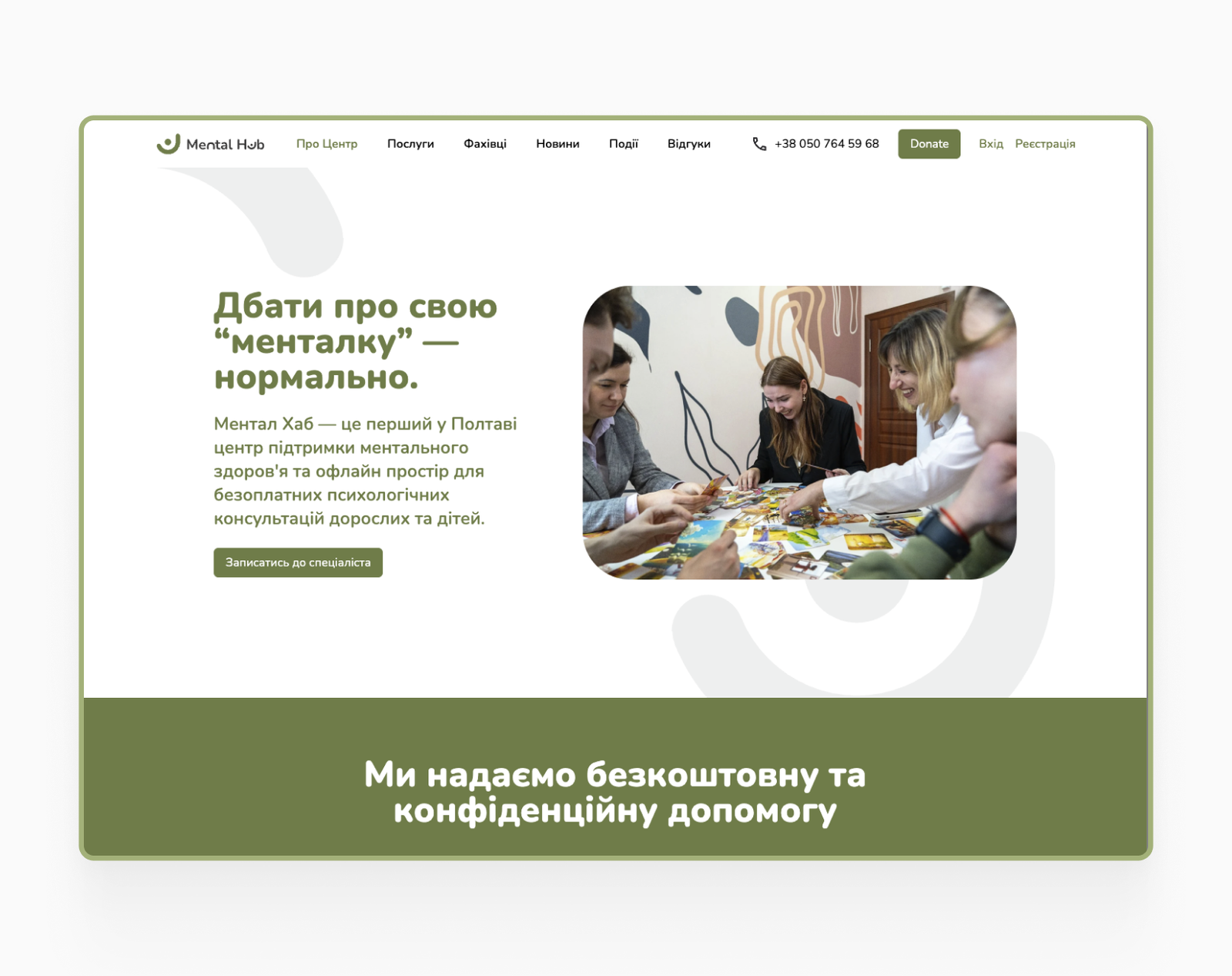
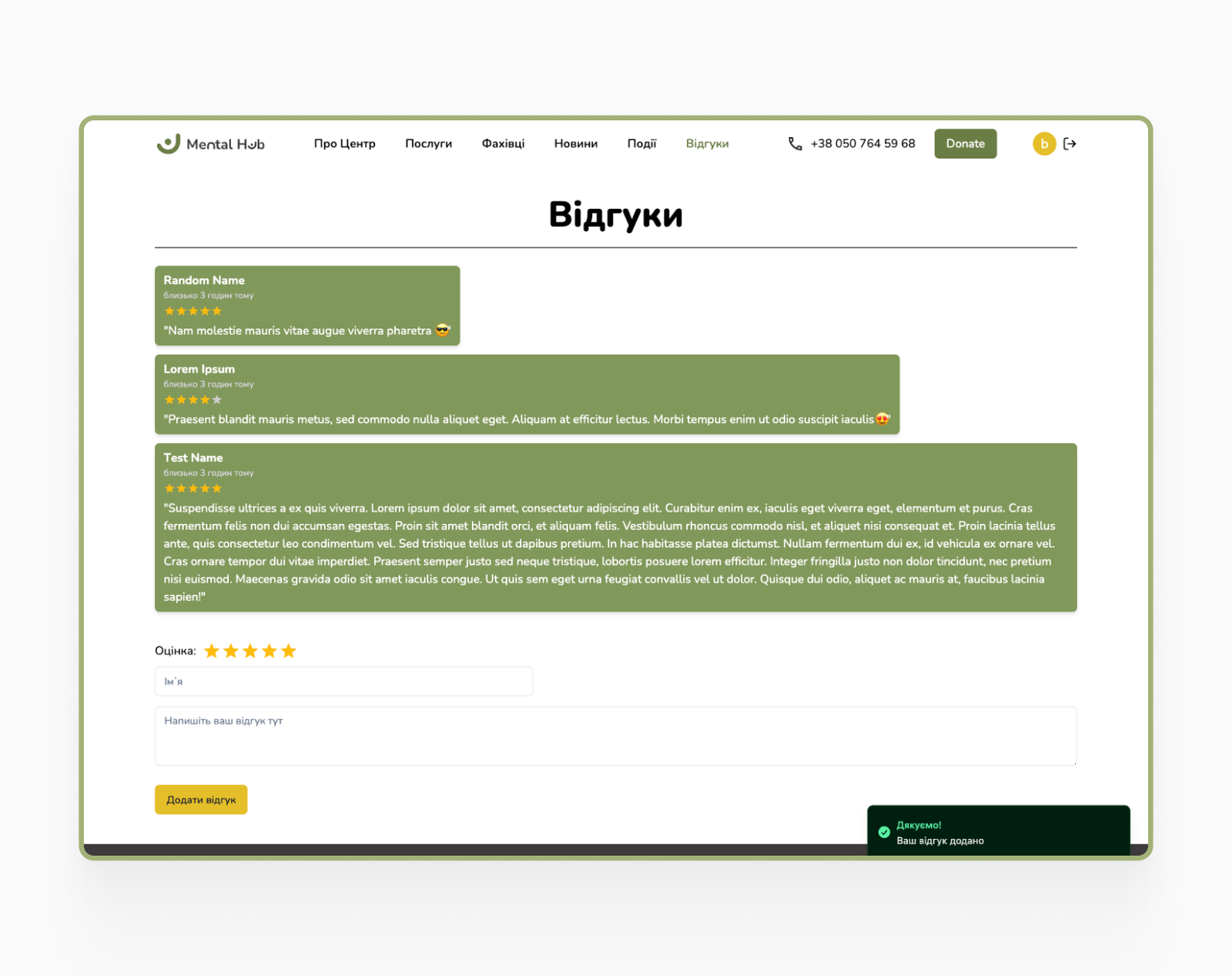
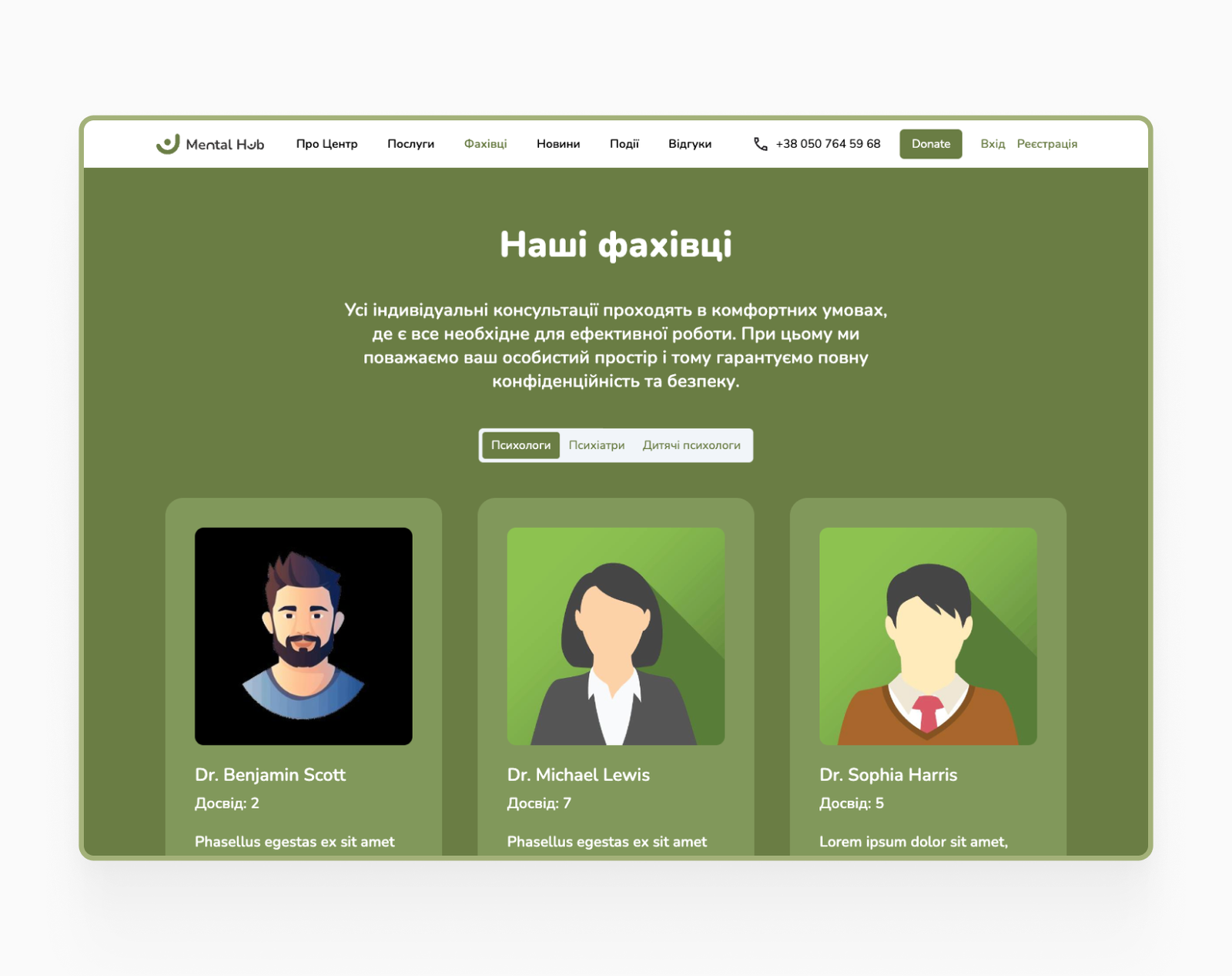
Visibility is everything for a non-profit like Light of Hope. Since Light of Hope relies on donor support and public trust, we paid special attention to how to structure content. The platform’s public-facing frontend needed to clearly explain who they are, what they do, and why it matters. Whether users come to learn, donate, or seek help, the content structure and navigation were carefully built to support clear, logical steps.
Clear Admin Panel
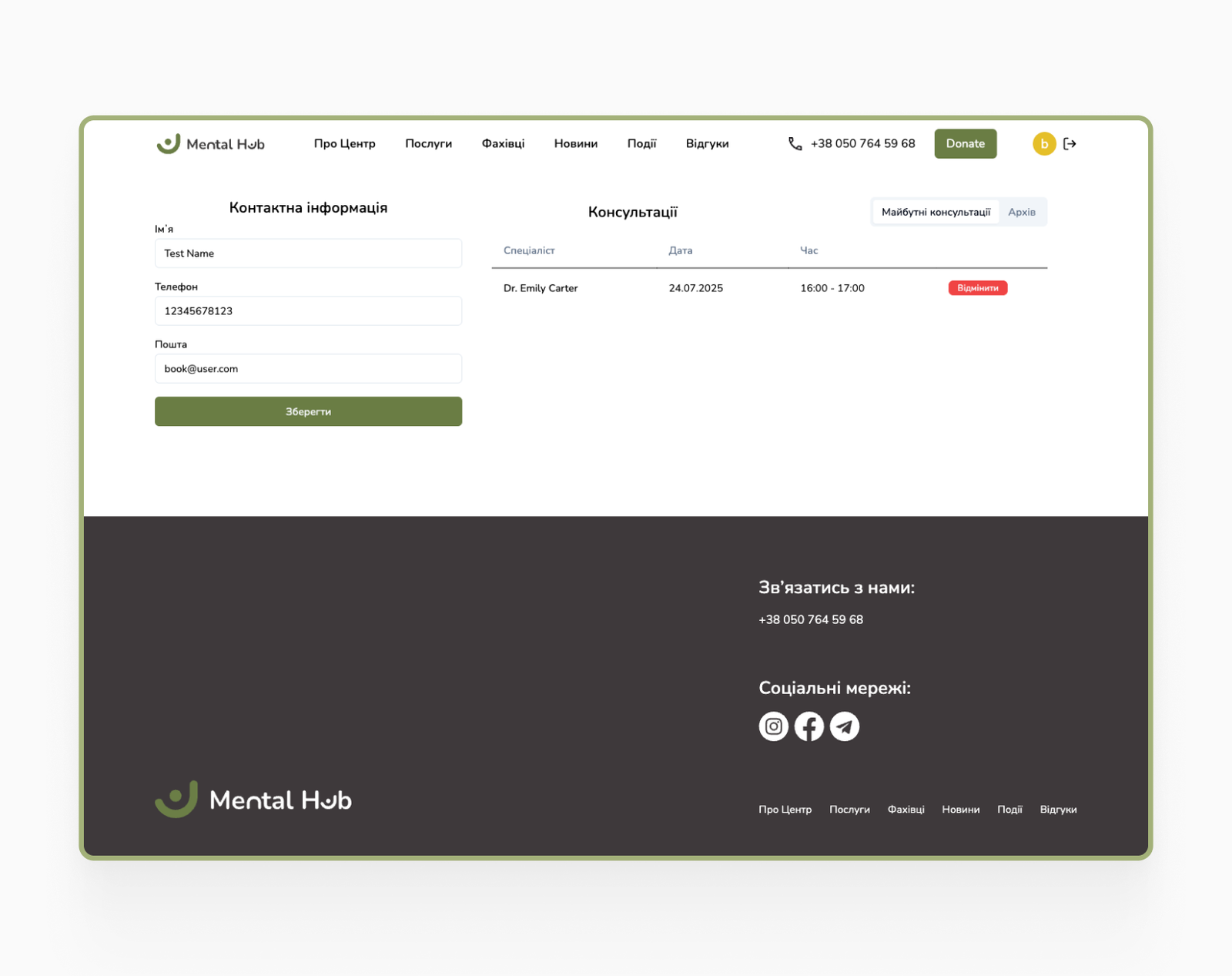
Having broad experience working with non-profits, we learned that roles are often rotated or overlapping in most non-profit organizations. That’s why the admin interface logic had to be as simple as possible to be quickly caught by new users. From setting therapist schedules to generating reports, every action was simplified. We avoided commercial out-of-the-box admin tools and built a custom solution for people with limited free time but a meaningful mission.
Design Process
Using the Existing Brand Identity
The organization already had a recognizable brand identity, so we made that our starting point. The designer created a clean, modern landing page that reflected their visual style. This design served as a reference for the rest of the platform.
Replacing an Old Website
The old website was built on Wix, overloaded with content, and difficult to navigate. But what is most important is that the website didn’t match the real needs of the users. We designed a much leaner platform that allows new admins and therapists to get onboarded quickly. Every flow was made intuitive, so anyone can start using it in minutes.
Component-Based Internal Design
The internal interface was developed to visually align with the landing page, following the same design guidelines. We followed a component-based approach using React, HTMX, and UI libraries like Material UI. This allowed the team to speed up development, keep costs down, and ensure consistency across the platform without overengineering the visuals.
Outcome
Due to geopolitical shifts, the project faced unexpected challenges when international funding was suddenly cut off. Despite the initial success, this impacted Light of Hope’s ability to ensure psychological hub functioning. At this stage, we temporarily made the booking system unavailable, but preserved the landing page, contact details, and donation functionality to keep the organization visible and continue fundraising. Our dedicated and generous client is now looking for new funding sources.
The flexible platform architecture allowed the team to hide certain modules without ruining the system. Light of Hope can maintain an informative digital presence, clearly communicate their mission, and provide visitors with an option to donate, even while core services are temporarily paused.
In times of uncertainty, we sincerely encourage you to support Ukrainian initiatives like Light of Hope or any others whose values and mission deeply resonate with you. They offer real, free support to people in need. Explore, support, and share the work of these organizations to influence what truly matters.
Is this case in line with what you have planned to build?
Let’s schedule a quick call to explore how we can support your business objectives